
Living in Tempe: ASU, Town Lake, and What Buyers Should Know
Tempe may be best known as the home of Arizona State University, but living in Tempe can look very different depending on where you are in the city.
You can be close to Downtown Tempe, ASU, restaurants, entertainment, and major events. Head farther south, and the atmosphere becomes increasingly residential. North Tempe can put you surprisingly close to Scottsdale, while neighborhoods around Kiwanis Park and The Lakes offer another side of the city altogether.
That variety is one reason I think buyers should spend some time getting to know Tempe before narrowing their home search.
When buyers come to me interested in Tempe, central Valley access is the number one request I hear, followed by finding a home without an HOA. Tempe’s location can make it especially appealing to people who want convenient access to several parts of the Valley without necessarily living in Phoenix or Scottsdale.
If you’re considering a move to Tempe, here are some things I think are worth understanding before you start looking at homes.
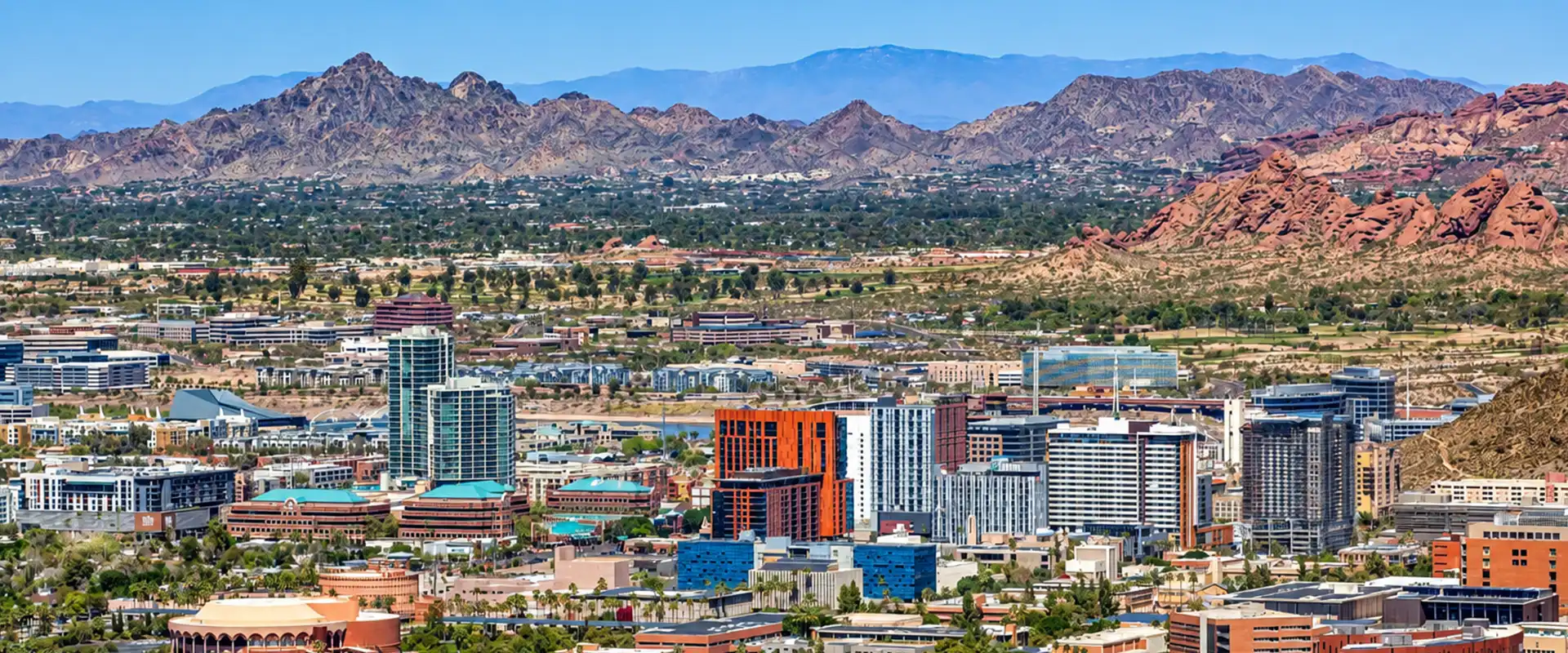
Tempe’s Central Location Is a Big Part of Its Appeal
One of Tempe’s biggest advantages is where it sits within the Phoenix metropolitan area.
For many of the buyers I speak with, that matters more than any single attraction.
Depending on where you live in Tempe, you’re positioned near major routes connecting you with Phoenix, Scottsdale, Mesa, Chandler, and other parts of the East Valley. That can make Tempe worth considering for households where people commute in different directions or want convenient access to more of the Valley.
North Tempe can be especially appealing to buyers who like Scottsdale but don’t necessarily want to live there.
I’ve worked with buyers who specifically wanted to be near Scottsdale without actually being in Scottsdale, which made North Tempe an area worth exploring.
This is where looking beyond a city name becomes important. When I’m helping someone relocate to Arizona, I want to understand where they’ll be working, where they’ll spend their free time, and what they want everyday life to look like. Then we can determine which communities and neighborhoods make the most sense.
If you’re still comparing locations, my East Valley Communities guide is a good place to see how Tempe fits alongside other communities in this part of the Valley.
ASU Is Part of Tempe, but It Doesn’t Define the Entire City
There’s no separating Arizona State University from Tempe’s identity. The university has a major presence in and around Downtown Tempe, and buyers considering homes near campus should understand what that location brings.
But that doesn’t mean everyone buying in Tempe wants the same experience.
In my own work, my Tempe buyers have often included investors and parents with a student attending ASU. Some parents have considered properties where their students can live while renting additional rooms. I’ve also worked with buyers interested in using a Tempe property themselves during part of the year and potentially offering it as a short-term rental at other times.
Those situations require some additional homework.
Tempe regulates short-term rentals. Properties rented for 29 days or less require a city short-term rental license, and owners must meet additional city, county, tax, insurance, notification, and operating requirements. (Short Term Rental Information)
If rental potential is part of the reason you’re considering a property, don’t assume a home is automatically suitable for that purpose. City requirements, HOA rules where applicable, property restrictions, financing, taxes, and the specifics of your intended use all need to be investigated before purchasing.
For a traditional homebuyer, the bigger takeaway is simpler: don’t assume all of Tempe feels like the area immediately surrounding ASU.
It doesn’t.
Downtown Tempe and Town Lake Put You Close to the Action
For someone who enjoys being near activity, Downtown Tempe and the Town Lake area offer a combination that is hard to replicate elsewhere in the East Valley.
Restaurants, entertainment, ASU, recreation, employment, and events are concentrated within a relatively compact part of the city. Tempe Town Lake adds another dimension with parks and facilities along its shoreline, boating and other recreational opportunities, and numerous community events throughout the year. The city reports that more than 40 special events take place at Town Lake annually. (Tempe Town Lake)
That’s appealing to some buyers.
It may be less appealing to others.
One thing I tell someone relocating here is to think about how close they actually want to be to the activity.
Major events in Tempe can significantly increase traffic. If you’re considering a home near Downtown, ASU, or Town Lake, visit the area at different times rather than only on a quiet weekday afternoon.
Would you enjoy being close to what’s happening?
Or would you rather be able to visit Downtown Tempe when you want to and then return to a quieter residential area?
The good news is that Tempe offers options for both types of homeowners.
Different Parts of Tempe Offer Different Ways to Live
Tempe isn’t one uniform collection of neighborhoods. In fact, the City of Tempe formally recognizes eight different character areas, including Papago/North Tempe, Downtown Tempe/Rio Salado/ASU/Northwest Neighborhoods, Kiwanis/The Lakes, and Corona/South Tempe. (Tempe Character Areas)
Those distinctions are useful for buyers because they reinforce something you’ll quickly notice when exploring the city.
North Tempe and the Papago area can make sense for buyers who value proximity to Scottsdale and northern Tempe. Its location creates a different starting point for daily life than you’ll find farther south.
Downtown, ASU, and the Rio Salado area put you closer to the university, Town Lake, entertainment, events, employment, and a more active urban environment.
Kiwanis and The Lakes shift the experience toward established residential areas and recreation. The city’s park analysis identifies 12 park properties within the Kiwanis/The Lakes character area, reinforcing the area’s connection to outdoor and recreational amenities. (Tempe Making Space)
South Tempe and the Corona area take you farther from the Downtown/ASU environment and into another of Tempe’s established residential character areas.
I wouldn’t recommend choosing between these areas based on an online description. Drive them. Walk around where appropriate. Pay attention to the homes, streets, traffic, nearby businesses, parks, and how long it takes to get to the places you’ll visit regularly.
That’s especially important when you’re relocating and don’t yet have a mental map of the Valley.
Looking for a Home Without an HOA? Tell Me Early
After Central Valley access, no HOA is one of the most common requests I hear from buyers interested in Tempe.
That can influence how we approach the search.
Tempe has many established residential areas, but HOA status varies by property. We shouldn’t assume that a home does or doesn’t belong to an association simply because of its age, appearance, or neighborhood.
If avoiding an HOA matters to you, please tell me at the start of the search. We can make it part of the criteria we use when evaluating individual properties.
The same applies if you want an HOA because you prefer a community with certain shared amenities or standards.
Neither preference is right for everyone. What matters is knowing what you’re buying and understanding any applicable rules, fees, or restrictions before you decide.
Outdoor Living in Tempe Goes Beyond Town Lake
Tempe Town Lake gets much of the attention, but it’s not the only outdoor amenity buyers should know about.
The city’s different character areas include parks, bike paths, open spaces, and recreational facilities. (Area Information)
That means your outdoor priorities can help narrow the search.
If you picture yourself spending time near Town Lake, you may gravitate toward a different part of Tempe than someone who wants a more traditional residential neighborhood near a community park. If biking or walking matters to you, we can look at how a particular property connects to the places you expect to use regularly.
This is another reason I prefer to talk about lifestyle before simply sending someone a list of homes.
The house matters, but so does everything around it.
Relocating to Tempe? Experience It Before You Decide
Online research is a good starting point, especially if you’re moving to Arizona from another state.
It shouldn’t be the entire process.
If Tempe is on your list, spend time in more than one part of the city.
Visit Downtown and Town Lake. Drive through North Tempe. Explore residential areas farther south. See what traffic feels like when ASU is in session or when a major event is taking place. If you’re considering a particular neighborhood, experience it at more than one time of day.
Most importantly, think about what you want to be close to.
For one buyer, being near restaurants, events, and ASU may be exactly what makes Tempe attractive. Another may love Tempe’s central location but want to live farther from Downtown. Someone else may prioritize getting closer to Scottsdale, finding a property without an HOA, or having convenient access to several different parts of the Valley.
Those are very different searches, even though every buyer may tell me the same thing at first:
“I’m interested in Tempe.”
Finding the Right Part of Tempe Starts With Your Lifestyle
Tempe packs quite a bit of variety into one city.
ASU and Downtown bring energy and activity. Town Lake provides a major recreational and event destination. North Tempe offers convenient access toward Scottsdale, while established areas farther south give buyers other residential options to explore.
The key is figuring out which version of Tempe fits you.
If you’re relocating to Arizona or considering a move within the East Valley, I can help you compare neighborhoods, understand what you’re seeing in the local market, and build a home search around what matters most to you.
You can start by exploring my Tempe homes and community guide or learn more about how I help clients relocating to the East Valley.
When you’re ready, let’s talk about what you’re looking for and find the part of Tempe that feels right for the way you want to live.
Let's Talk
- (480) 258-1629
Email Support
- soldby@myrealtormarla.com
Office Location
-
1300 N McClintock Drive
Chandler, AZ 85226